

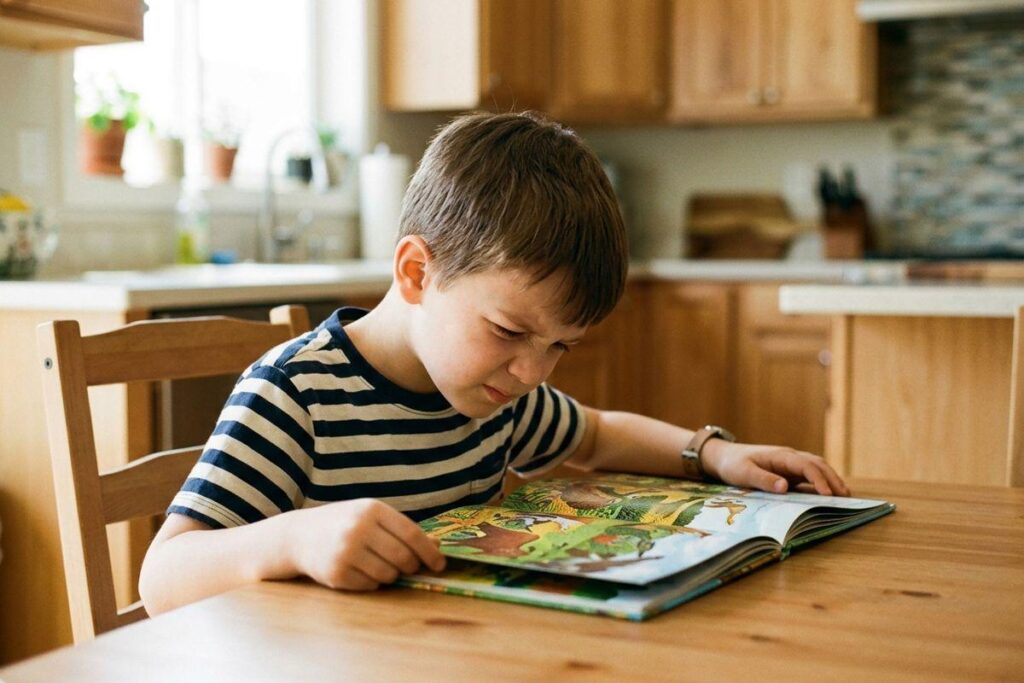
Squinting shows up in kids more often than parents expect, and it’s rarely just a face they’re making for fun. It’s usually their eyes working overtime to make sense of a blur they can’t explain.
Frequent squinting usually points to a refractive error, an eye alignment issue, or light sensitivity, and a comprehensive eye exam can help sort out which one it is. Nearsightedness tends to be the more common culprit in school-age kids, though farsightedness plays a role too.
What a Squint Might Mean
When your child narrows their eyes, they’re doing more than making a face. Squinting changes the shape of the eye for a moment and lets in a smaller, sharper beam of light. That small change can bring a blurry image into focus, if only for a second.
A squint here and there isn’t much to worry about. Bright sun or a quick glance across a room can bring one on.
Frequent squinting is the part worth watching, especially when it happens during reading, TV time, or a glance at the classroom board. That pattern usually means the eyes are working harder than they should to bring the world into focus.
Why Do Kids Squint, Exactly?
Squinting can come from a few different places, and it helps to know what you’re looking at.
Refractive Errors
Most squinting comes down to how the eye bends light. When the shape’s a little off, images land in the wrong spot and turn fuzzy:
- Nearsightedness blurs faraway things, like street signs and the classroom board.
- Farsightedness blurs close-up work, like books, tablets, and homework.
- Astigmatism blurs objects at every distance, near and far.
Eye Alignment and Other Causes
Not every squint traces back to a refractive error. Sometimes the eyes don’t team up the way they should, or something in the room makes focusing harder:
- A lazy eye or crossed eyes can push your child to squint to line up what they see.
- Bright rooms or sunny windows can make sensitive eyes pinch shut.
- Squinting can also turn into a habit or a small facial tic with no vision problem behind it.
Other Signs Your Child May Need an Eye Exam
Squinting rarely shows up alone. Watch for a few habits that tend to travel together with it:
- Frequent eye rubbing
- Extra blinking
- Headaches after school or a stretch of homework
- Sitting close to screens
- Tilting the head to one side
Why Kids Rarely Speak Up
Here’s the tricky part: your child probably won’t tell you their vision is blurry, because to them, it looks the way it always has.
They have nothing sharp to compare it to, so fuzzy letters feel normal. Younger kids also don’t have the words to explain that the board looks soft or the page swims a little. That’s why quiet clues like squinting and head tilting carry so much weight.
When a Squint Points to Something More
Most squinting is minor, but a couple of patterns deserve a closer look.
A Sudden Change
A squint that shows up out of nowhere is worth a closer look. A new pattern, especially one where a single eye squints more than the other, can point to a change that an optometrist should check.
Signs Linked to School and Sports
Vision does a lot of quiet work during the school day and on the field. When it slips, the effects can look like something else entirely:
- Trouble reading the board from a normal seat.
- Skipping lines or losing their place while reading.
- Difficulty judging how far away a ball is or catching it.
A child who seems restless during reading or hesitant during sports may simply be struggling to see the details.
What an Eye Exam Actually Checks
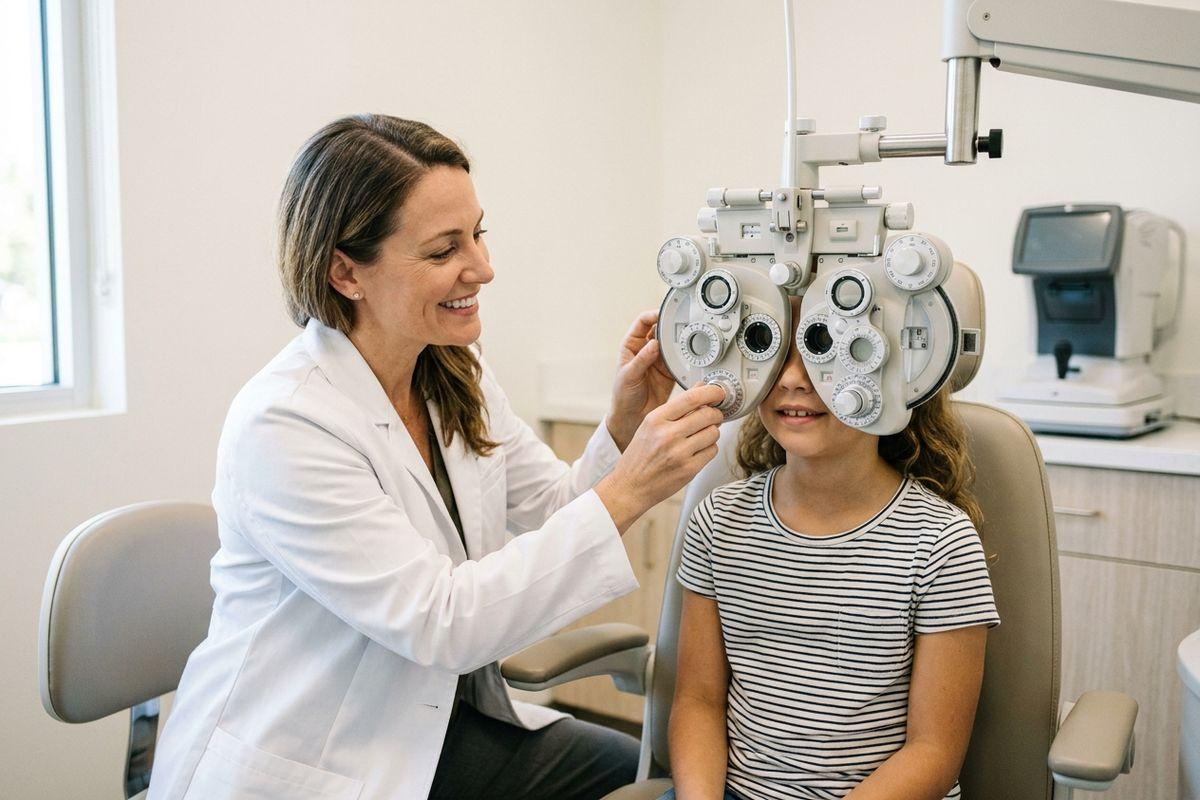
A school screening can flag a big problem, but it moves fast and only covers a slice of how the eyes work. A full exam looks at focus, eye teaming, and eye health together.
Exams for kids use pictures and simple games, so your child can take part even before they know their letters. From there, an optometrist can walk you through options like glasses, contacts, or patching for a lazy eye, and match the plan to your child’s age and needs.
Simple Habits to Support Healthy Vision
A few small routines can ease the strain on your child’s eyes each day:
- Follow the 20-20-20 rule: take a 20-second look at something 20 feet away every 20 minutes of screen time.
- Aim for about 2 hours of outdoor play daily to give the eyes distance and natural light.
- Keep study areas and screens in well-lit spaces to cut down on squinting.
Don’t Let Squinting Go Unanswered
Frequent squinting is your child’s way of asking for a little help seeing the world clearly. The team at Total Vision Sports Arena can take a closer look and find out what’s behind it. Schedule your child’s eye exam today and give their vision the attention it deserves.